Nobody tells a top performer the truth.
That’s the thing nobody talks about.
When you’re hitting your numbers, when you’re closing deals, when you become the person leadership points to as an example, the people around you go quiet. Not because everything is fine, but because the cost of telling you the truth feels too high.
I know this because I spent six years at IBM being exactly that person.
Decorated. Recognized. Completely blind to what was actually happening around me.
I made the 100% Club. I was chasing the Golden Circle, IBM’s highest sales honor, reserved for the top 1% of performers worldwide. I pushed product teams, leaned on finance, and challenged engineers. I closed deals that other people couldn’t close.
I was still passed over for every promotion I believed I had earned. Peers with my numbers moved up. I stayed where I was. For six years I told myself it was politics. It wasn’t politics.
It was something far more uncomfortable and far more important.
I had confused performance with leadership.
In my mind, they were the same thing.
Hit the number. Win the deal. Beat the competition. That was leadership. That was what I had been taught, not in a classroom, but by watching the people above me. My first boss believed lunch was for the weak. Another would put your chair outside the meeting room at 8:59am if you weren’t in it for a 9am meeting. Then he’d lock the door.
These were the men I watched. These were the behaviors I absorbed. And when I got my own team, I grabbed that baton and ran as fast as I could. I was getting things done.
Nobody liked me. Not because I was demanding — great leaders can be demanding. But because I had made it clear, in a hundred small ways, that the people around me were instruments for my success rather than the reason for it.
I fought for deals, but I didn’t develop people. I pushed for results, but I didn’t build trust. I showed up every day focused entirely on what I could produce and almost never on what I could build in the people around me.
Here’s what that blind spot costs you.
It costs you the promotions that go to people with comparable numbers but deeper relationships. It costs you the honest feedback that would have made you better because nobody tells the truth to a leader who isn’t safe to tell the truth to. It costs you the kind of followership that can’t be demanded. The kind that has to be earned.
And in my case, it almost cost me the most important lesson of my career because I was on my way out the door when it finally arrived. After six years I stopped waiting for the promotion. I submitted my resignation and started planning my next move.
Then a man who worked under me, older than me, wiser than I had ever given him credit for, asked if he could speak with me before I left. I almost said no.
He sat down across from me, looked at me in the eye, and told me the truth that nobody else had been willing to say out loud. Not with anger. Not to settle a score. Just the truth. Quietly. Directly. The only way someone with nothing left to lose can deliver it. Some moments deserve more than a paragraph. That one earned a chapter in my new book.
What I learned about followership.
After that conversation I made a vow. Not to be less competitive, not to care less about results, but to understand that the way I pursued results was either building something or destroying something, and I had been destroying things without realizing it.
The leader I went on to become at Pitney Bowes, at SuperValu and Cub Foods, at Walmart were built on one fundamental shift:
The results matter. How you get them matters just as much.
You can be the most talented person in the room and still fail the most important test of leadership: which is whether people choose to follow you. Having a team believe where you’re going and trust that you will take care of them on the way there.
That’s followership.
The gap nobody talks about.
Here’s what I’ve learned in the four decades since that conversation.
The higher you rise, the less likely anyone is to tell you the truth.
Frontline employees soften it for their managers. Managers soften it for directors. Directors soften it again for senior leaders. By the time the real picture reaches the top, it’s unrecognizable. So, leaders keep producing. Keep climbing. And the gap between how they think they’re leading and how their people are experiencing them grows wider every year — invisible, until it isn’t.
I’ve watched it play out in organizations across every industry I’ve worked in. Talented leaders. Strong results. Teams that were quietly disengaging, withholding the truth, doing just enough because nobody felt safe enough to say what needed to be said.
That gap is the most expensive problem in leadership today. Not a lack of strategy. Not a lack of talent. A lack of leaders who know the difference between being someone who produces results and being someone people genuinely want to follow.
The question worth sitting with.
Think about the people on your team right now. Not whether they’re hitting their numbers. Whether they would follow you if they didn’t have to. Whether they tell you the truth or a version that they think you can handle. Whether they are growing or just working.
That gap between what you intend and what people actually experience is where leadership either takes root or quietly falls apart. I spent six years at IBM not knowing that gap existed in me. It took one honest conversation to change everything.
That conversation is where this book begins.
Uncommon Leadership releases July 2026. The full story, including what that man said to me, and the framework I built from it is in the book.
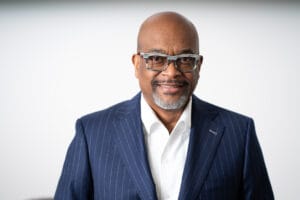
Keith Wyche is a keynote speaker and former Fortune 500 executive focused on building trust, strengthening culture, and leading with integrity.
Sign up for a free introduction of Uncommon Leadership: A blueprint for restoring trust, integrity, and people-centered leadership. Book releases July 2026.